Invisible aligners vs. braces: which one is right for you?
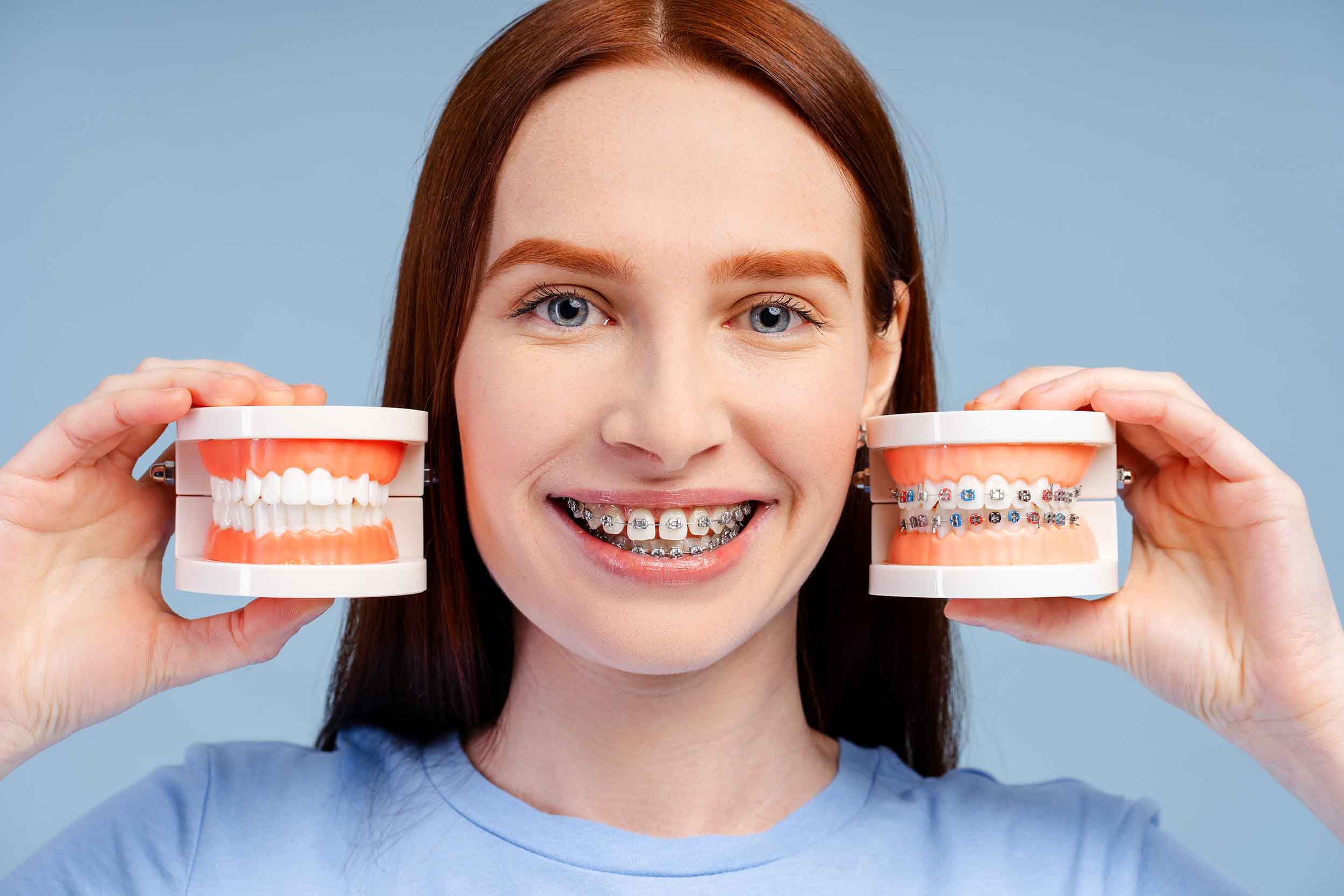
One of the questions I hear most often before starting treatment: “Doctor, which is better — aligners or braces?”
The honest answer: it depends on you. Both are effective treatments for straightening teeth and correcting the bite. But they have important differences worth knowing before you decide.
What are invisible aligners?
They’re clear, custom-made trays that fit snugly over your teeth. They work by applying gentle, continuous pressure to move teeth gradually into position.
The process starts with a digital scan of your mouth — no messy impression material. From that scan we design a series of aligners, each slightly different from the last. You switch to a new one approximately every two weeks, following the plan we set together.
One of the things patients love most: before you even start, you can see on screen how your smile will look at the end. That’s incredibly reassuring.
What are braces?
Braces are small pieces — typically metal, though also available in ceramic and sapphire — bonded to each tooth. An archwire connects them and, guided by small elastics, applies the force needed to align the teeth.
Braces have been the most widely used orthodontic treatment for decades. They’re highly effective for cases of every complexity level.
Head-to-head comparison
Visibility
- Aligners: nearly invisible. Most people won’t notice you’re in treatment.
- Metal braces: clearly visible. Ceramic and sapphire options are less noticeable, but never as discreet as aligners.
Comfort
- Aligners: no wires or metal edges, so less irritation inside the mouth.
- Braces: can cause some rubbing on the cheeks or tongue, especially at first. Most people adjust with time.
Hygiene
- Aligners: you take them out to eat and brush, so your routine stays exactly the same.
- Braces: require more effort — special brushes, superfloss, possibly a water flosser. Very manageable, but it does take more time and care.
Discipline
- Aligners: you need to wear them at least 22 hours a day. If you forget or take them out too often, treatment gets delayed. Consistency is essential.
- Braces: can’t be removed, so they work 24 hours a day regardless of your schedule.
Effectiveness
- Aligners: excellent for mild to moderate cases, and with today’s technology, effective for many complex cases too.
- Braces: can address virtually any case, including the most complex.
Cost
- Traditional braces: generally the more affordable option.
- Aligners: a larger investment, but with aesthetic and comfort benefits many patients find well worth it.
Which one is right for your case?
There are clinical factors only a consultation can reveal — the complexity of your bite, tooth positions, and treatment goals. Not every situation is solved the same way with each technique.
But personal factors matter too:
- If discretion is important for your work or social life: aligners are an excellent choice
- If you know you’re disciplined and consistent: aligners will work well for you
- If you’d rather not think about it and just let the appliance do its job: braces are very practical
- If your case is very complex: we review together which option delivers the best outcome
My recommendation as a specialist
There’s no single right answer for everyone. What I can tell you is that at MG Ortodoncia Invisible I work primarily with high-technology aligners because they give me very precise control over tooth movement, and because my patients find them comfortable to live with.
But we always make the decision together, after reviewing your case thoroughly.
Want to find out which option is best for you? Book your diagnostic consultation — no commitment required.